


In the era where finance sector is evolving rapidly across the globe, India has taken a bold step to introduce SWAGAT-FI (Single Window Automatic and Generalised Access for Trusted Foreign Investors) with the aim of making the capital market more efficient, accessible, and compatible for the Trusted Foreign Investors.

Through this initiative, the Securities and Exchange Board of India (SEBI) seeks to modernize and streamline regulatory and compliance procedures for trusted foreign investors. The objective is to strengthen India’s position as a preferred destination for global capital by reducing procedural friction and enhancing regulatory clarity.
SEBI introduced SWAGAT-FI through a notification dated January 16, 2026, with the framework coming into force from June 1, 2026.
What is SWAGAT-FI?
SWAGAT-FI is a single-window regulatory framework intended to simplify onboarding and compliance requirements for a specified class of trusted foreign investors, rather than going from one interface to another and taking multiple routes with same checklists and documentation requirements.
Under SWAGAT-FI, eligible investors can go on a consolidated interface for compliance across categories, reducing duplication and enhancing efficiency.
To align with the relevant regulatory update, SEBI has amended Foreign Portfolio Investors (FPI) Regulations, 2019 and the Foreign Venture Capital Investors (FVCI) Regulations, 2000.
These changes, introduced via the SEBI Regulations 2025, are set to take effect on June 1, 2026.
Why It Matters?
This framework is an expedient, low friction monitoring and onboarding regime for the convenience of trusted investors having efficient oversight of regulatory as well as AML/CFT in their own jurisdiction only.

In spite of the same, the portfolio and framework for the foreign investors were cumbersome, complicated and consisted of multiple streams for registration, required separate registration and duplication of work was the major concern specially for such investors who were looking to make the investment in both public as well as private securities.
Who Are Trusted Foreign Investors?
The framework, is restricted to a defined class of “Trusted Foreign Investors,” identified on the basis of regulatory status, risk profile, governance standards, and investment horizon. SEBI has defined a class of investors which are objectively of high regulation, have low risk and are considered trustworthy on the basis of their finances and governance. These undertakes:
| Government or Related Entities | Public Retail Fund | Pension Fund and Insurance Sector |
|---|---|---|
|
Unit trusts as well as mutual funds – open for respective investors. | Uniformly regulated investors of respective institution with long lasting horizons. |
Such categories are being defined for effective functioning, transparency, focus on long term growth and investment and the size, all this ultimately help in stabilizing the market and enhance liquidity.
Changes Made by SWAGAT-FI
| S.No. | Particulars | Description |
|---|---|---|
| 1 | Less Redundancy | With this single window initiative, the investors are not required to make individual applications for respective investment categories. |
| 2 | Minimizing compliance frequency | Compliances like KYC, renewals, and such are now done once in a decade and not in every three or five years. |
| 3 | Enhancing investor access | With well-organized portal of SWAGAT-FI, all the trusted investors and the other foreign entities can get the easy and simplified access to the Indian financial market. |
| 4 | Boosting operational simplicity | Operations will become effective and efficient as one demat account can be used for making investment in diverse categories. |
STRATEGIC GOALS
The ambition behind SWAGAT-FI was not only to provide ease to the paperwork, but to provide one stop solution. It is a strategically planned tool which aims at variety of things and some of them are:
- Encouraging Participation: Ease and simplification of the compliances and extension in the validity results in great investment from the investors and specially from such investors who are operating in various classes of assets and are more probable in committing capital. This helps in enhancing liquidity, participation in the market, diversification and expansion when it comes to both private as well as public markets.
- Promoting Competitiveness at Global Level: Indian market is in competition with various established markets and their financial hubs like London, Dubai, and Singapore. A streamlined process for investments and onboarding helps Indian market to become attractive and boost themselves at global level. Also, this helps in making the offer to the investors with more predictable and precise regulatory experience.
BENEFITS OF FVCI REGULATIONS
With respect to the SEBI (Foreign Venture Capital Investors) Regulations, 2000, the framework reportedly provides:
- Exemption from certain procedural requirements for grant of registration, where the applicant qualifies under SWAGAT-FI.
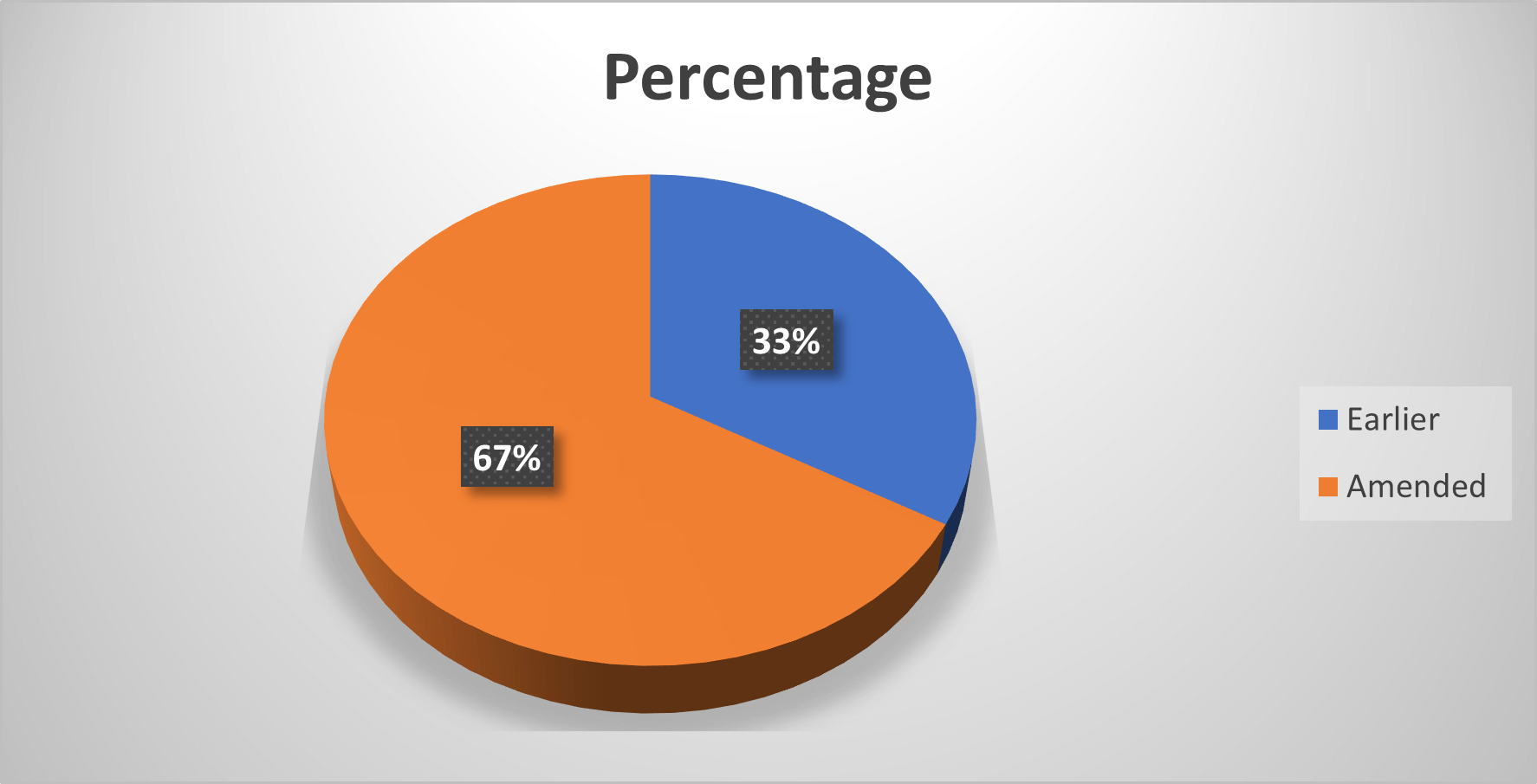
- Continuation of the investment allocation requirement mandating that at least 66.67% of investible funds be deployed in unlisted equity shares or equity-linked instruments of venture capital undertakings, with the remaining 33.33% permitted in specified instruments such as IPOs, debt instruments, or preferential allotments.
- Alignment of registration validity and fee payment structure with the amended FPI regime, including a ten-year validity cycle for eligible investors. The amendment states that the investors being categorised under SWAGAT-FI are required to make the payment of the respective registration fee as well as the renewal fee in the span of 10 years to manage and maintain the regularity of registrations, as to the conditions prescribed. Those FVCIs not eligible to SWAGAT-FI are required to make the respective payments concerning the renewal fee, every 3 years.
BENEFITS OF FPI REGULATIONS
-
SWAGAT-FI eligible FPIs are entitled to have up to 100% the respective corpus being contributed on the end of NRIs (Non-Resident Indians), Indian residents, and the Overseas citizens, in opposition to the standard limit of 50% which being applicable to other FPIs excluding the FPI having their establishment in IFSC and the one having the permission to have 100% of their contribution of corpus through NRIs, Indian residents as well as OCI (Overseas Citizen India).

- SWAGAT-FI eligible FPIs are eligible for extended registration validity of ten (10) years, as opposed to the standard three-year renewal cycle applicable to other FPIs.
Disclaimer
The information provided in this article is intended for general informational purposes only and should not be construed as legal advice. The content of this article is not intended to create and receipt of it does not constitute any relationship. Readers should not act upon this information without seeking professional legal counsel.